
(Ideas, proof-reading, and edits by me, initially drafted by Claude)
If you've spent time searching through Google Scholar trying to work out which of forty similar-looking papers came from serious venues, you know the problem: Scholar is wonderful at finding literature but not great about ranking them. Strangely, the order it selects for choosing what it recommends to you does not include any sorting by citation count. So, I did what any programmer who has fun building and learning new things does: I build a simple plug-in solution!
What it does
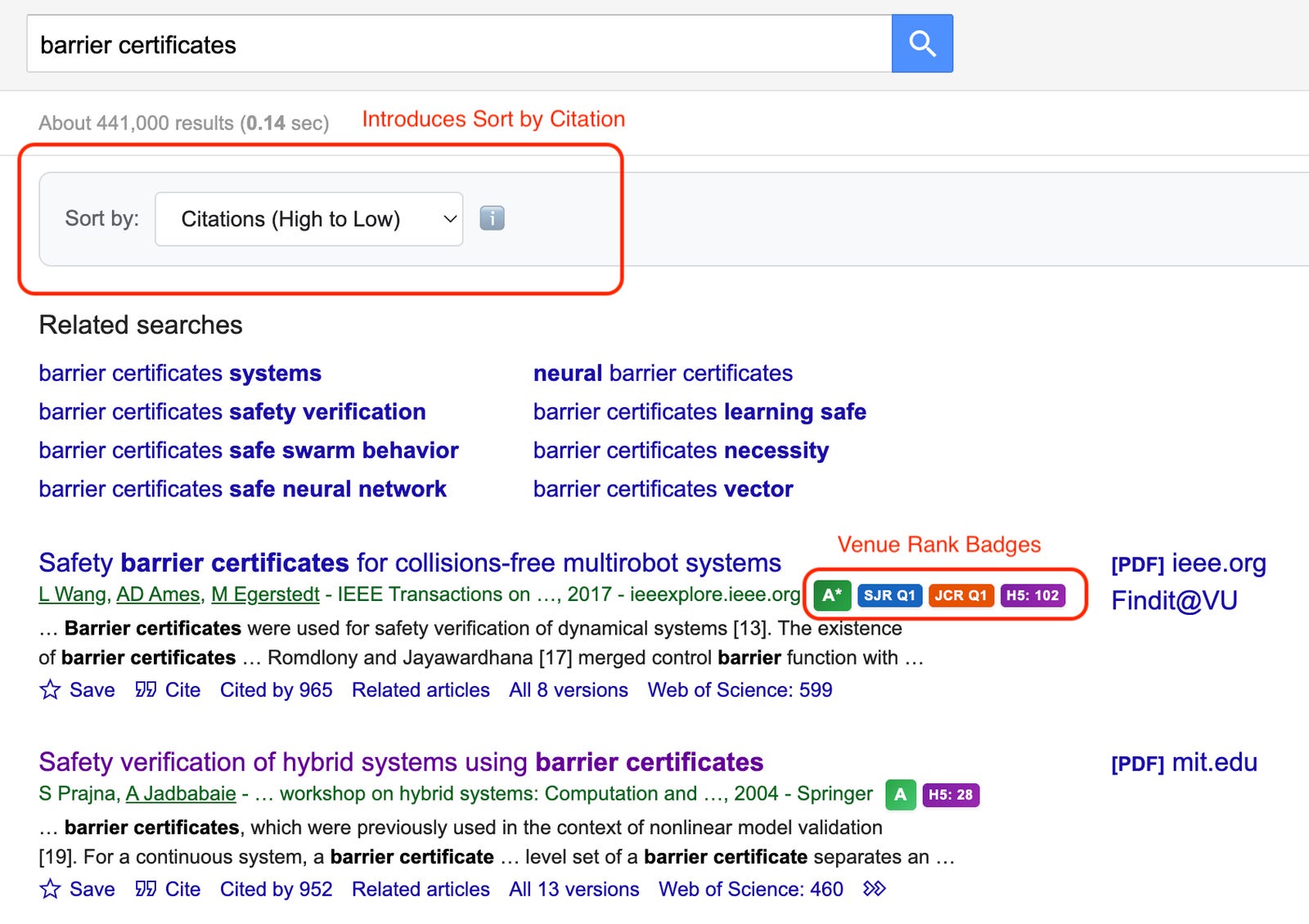
Google Scholar Orderer is a free, open-source browser extension that decorates Scholar with the context it's missing:
Venue ranking badges. Every search result gets color-coded badges showing how its venue scores across the ranking systems that academia actually uses:
CORE (A*, A, B, C) — the standard rankings for computing conferences and journals
SJR quartiles (Q1–Q4) — Scimago's Scopus-based journal rankings
JCR quartiles (Q1–Q4) — Journal Citation Reports impact metrics
ERA (A, B, C) — Excellence in Research for Australia rankings
QUALIS (A1–B5) — the Brazilian research quality classification
h5-index — Google Scholar's own five-year citation metric for venues
Hover any badge and a tooltip unpacks the full venue name and every metric it has.
Sort by citations. One click reorders any results page by citation count — most-influential first when you want the landmarks, fewest-first when you're hunting for overlooked work.
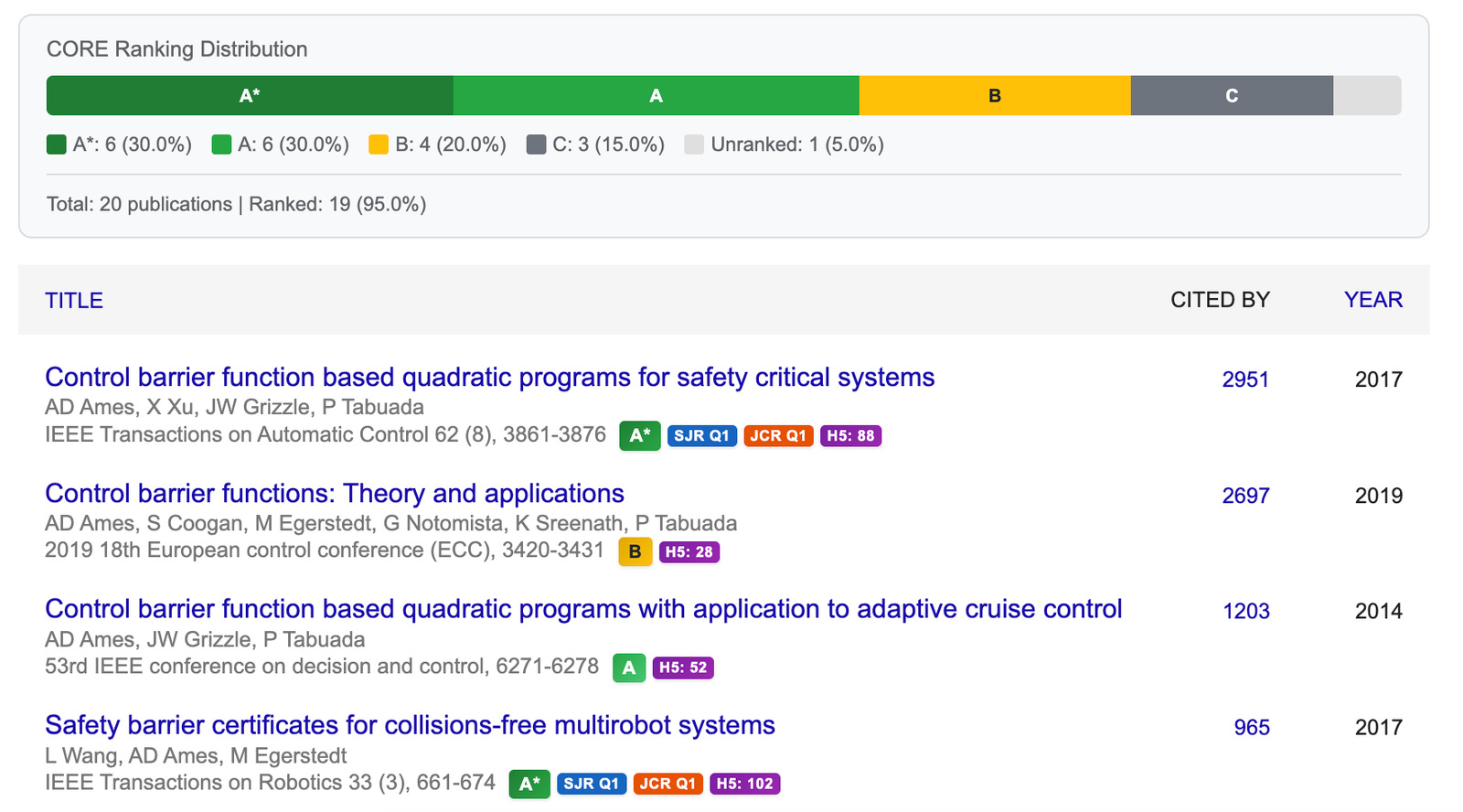
Author profile analysis. Open any researcher's profile and the extension draws a distribution bar of their publication venues — what fraction landed in A*/A venues, in Q1 journals, and so on, toggleable between ranking systems. Genuinely useful when you're assessing a potential reviewer or candidate and the alternative is skimming two hundred paper titles.
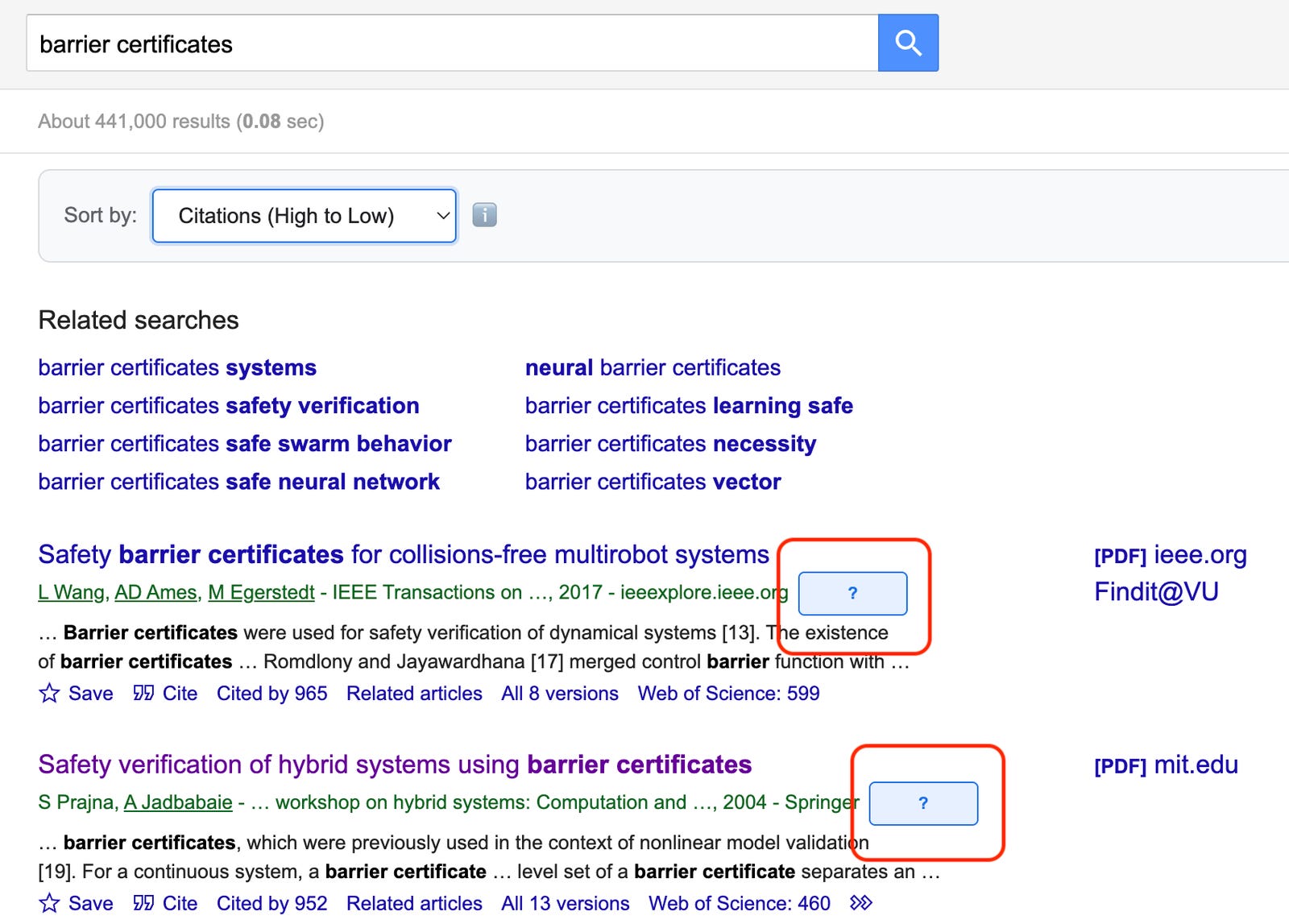
Smart venue matching. Scholar habitually truncates venue names ("Proceedings of the 37th International Conference on…"), which would defeat a naive lookup. The extension matches the fragments against its database anyway, and when a name is too mangled to resolve, a small "?" button fetches the full venue name on demand.
How it works, and where your data goes
Nowhere — that's the design. The extension ships with a local database of 500+ ranked venues; all the matching, badging and sorting happens inside your browser. No account, no telemetry, nothing sent to any server. It's also why it's fast: the badges appear as the page loads, not after a round trip.
Who it's for
PhD students doing literature reviews; researchers deciding where to submit; hiring and funding committees reading publication lists; anyone who has typed a venue's name into a rankings site for the hundredth time and wondered why this isn't just on the page.
An important caveat
It’s worth saying this out loud, venue rankings do not guarantee good research, there can be a brilliant paper in a C-ranked venue or a forgettable one at an A* conference. The badges are there to speed up your judgement, not replace it.
Get it
Free and open source, works with Chrome, Edge, Firefox, Brave and Opera:
GitHub: github.com/Kiguli/Google-Scholar-Orderer
Installation takes about a minute: download the repository, enable developer mode in your browser's extensions page, and load the folder. Found a venue that's missing, or a ranking that looks wrong? Open an issue, or feel free to reach out!